A Radical IFS Workshop

Make Your Parts Visible

4 IFS Techniques for Externalizing Parts

Every other Saturday · starting May 16 · 11–1 pm Central time 2 hours on Zoom · $165 per Class or $620 for Series

First class in your time zone:

If you've taken a class before, email me to join this one!

If you haven't taken a class before, schedule a quick Zoom to ensure it's a perfect fit and to get all your questions answered!

Schedule Zoom
Make Your Parts Visible

Saturday May 16

Conference Table

The Conference Table is a structured way to externalize multiple parts at once and work directly with their relationships. Managers love it!

Instead of tracking one part at a time, you place parts around an actual or imagined table—giving each one a seat, a position, and a voice. This makes polarization visible in real time: who is in conflict, who is aligned, who is trying to control the system, and who is being left out.

In this class, you'll learn how to set up and facilitate a Conference Table.

You'll practice bringing in key parts and getting a felt sense of how to use this externalization tool — for yourself and for facilitating work with clients.

The Conference Table is especially useful when you're stuck in loops, inner arguments, or fast-moving reactions. It turns internal noise into a visible, workable system, so you can intervene with precision rather than guessing from inside the blend.

Saturday May 30

Parts Mapping

Parts Mapping is a great method to use if you encounter a lot of parts, feel overwhelmed by parts, or need help keeping track of your parts.

You create a visual map of your parts, where they sit in relation to each other, how they cluster, who is in conflict, and who is trying to run the system. This shifts parts work from isolated conversations into system-level awareness.

In this class, you'll learn how to map your parts on paper using simple shapes, positions, and labels—no artistic skill required. You'll identify key players, track patterns that repeat across situations, and begin to see how managers, firefighters, and exiles organize themselves around core themes.

We'll also work with how to update your map over time, so it becomes a living document of your system rather than a one-time exercise.

Parts Mapping is especially useful when things feel tangled, repetitive, or hard to name. Instead of trying to think your way through the system, you'll be able to see it—and once you can see it, you can work with it more directly.

Saturday June 13

Parts Art

Parts Art is a direct, nonverbal way to externalize your system by letting parts move the pen.

Instead of mapping and labeling, you allow each part to express itself through scribbles, shapes, pressure, and movement. The focus is not on making something recognizable—it's on letting the part come forward in its own form.

In this class, you'll learn how to step out of interpretation and into expression. You'll practice handing the pen over to parts as they arise, tracking shifts in energy, speed, and intensity, and allowing multiple parts to show up on the page without needing to organize them.

We'll also work with how to relate back to what's on the page—how to sense which part is which, how parts respond to each other visually, and how this process can create access to parts that don't come forward easily through words.

Parts Art is especially useful when your system feels fast, blended, or hard to track cognitively. It bypasses analysis and lets parts show themselves directly.

Saturday June 27

Finger Puppets

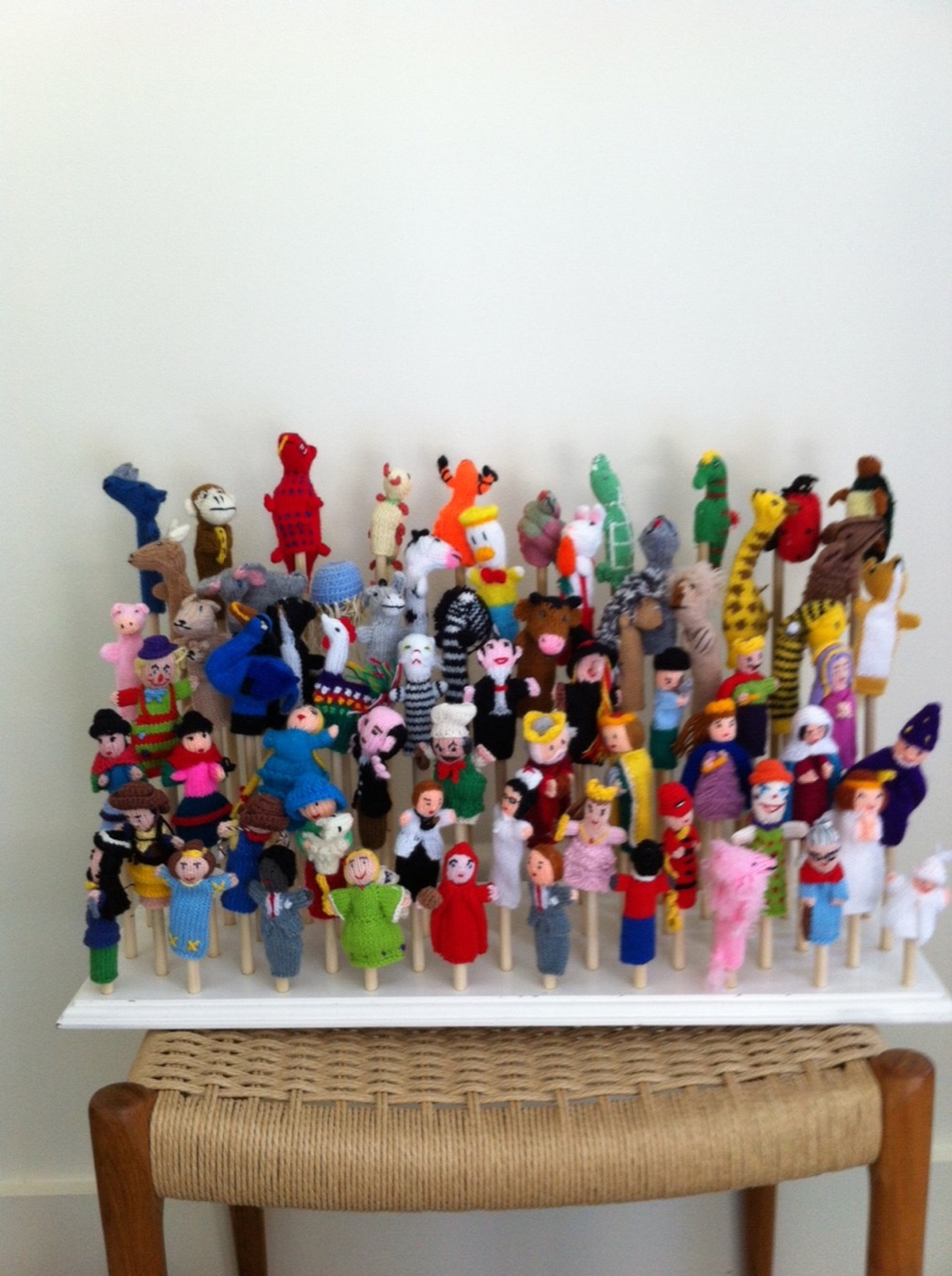
Using Finger Puppets or Other Objects is a great technique for UNBLENDING and EXTERNALIZING parts.

Using Finger Puppets or Other Objects is usually wildly loved by exiles, sometimes liked by firefighters, and sometimes makes managers uncomfortable, which is why I save it for the last class in the series.

Although it's an easy technique for getting parts out in front of you, some managers feel uncomfortable with puppets, feeling they might be too childish. It is possible to use any type of object to externalize parts, from scarves to rocks to cards to stuffed animals to finger puppets — so you can negotiate with managers around objects that feel comfortable for them.

Using objects makes IFS work incredibly tangible and relatable. For me, nothing has come close to the way using finger puppets revolutionized my IFS work, which is why I am extremely passionate about sharing it!

I've been using finger puppets for IFS since around 2005, for almost two decades. Not only do I have an enormous depth of understanding about how to use finger puppets to do IFS work, I am also a puppets aficionado, and I know places to buy fair-trade, handmade finger puppets; the types of materials that work best; the cultures that make the best finger puppets…you name it. I'm a finger puppet expert!

Using Finger Puppets or Other Objects is so simple, so creative, so fun and free-flowing, it lends itself to supporting IFS work in almost any situation, and therefore I believe it's an essential, basic unblending tool for everyone to have in their IFS toolbox. That's why I always include it in my basic (DIY) IFS Practice Group four-class series.

Finger puppet rack

IFS Live Online Class

Click here to schedule a free chat to see if this group is for you.

In the group, we will:

This class is the best fit for:

If you are looking for a place to:

I invite you to consider this group!

If you want to learn more, sign up for a free Zoom call with me, or watch one of my YouTube interviews to get a better sense of me as a person!

Our Group Structure

Introductions

Going inside / Journaling

We will begin as all IFS gatherings do, by going inside to connect to ourselves and center. Feel free to journal.

Sharing

A spacious check-in

Teaching and Q & A about the class topic

20 minute IFS Session Demonstration

Heartfelt feedback after the demo

Time to practice with your own parts

Sharing

Time to share any insights you want to share

Closing

After that, we'll close with a word or phrase we're taking with us.

Details

Does any of this sound familiar?

"I enjoy parts work with my practitioner / coach / therapist, but then I don't tend to check in with them between sessions."

"I want to be able to connect more deeply with my parts but my protectors won't let me."

"I just don't feel like journaling."

"I want to learn from someone who has experience working directly with their parts on their own. I don't want to just read about the IFS steps from a book."

"I'd like to connect with other like-minded people who also see IFS as a way of life, not merely something theoretical they're learning to use with clients."

If you resonate with any of these statements, then this drop-in group is ideal for you!

Imagine having a 23-year expert in IFS support you in developing your OWN relationship to your parts.

You'll learn how to:

About Melissa

Learn from a 23-year IFS Expert. Melissa Sandfort has been an IFS Certified Practitioner since 2010, with over 2,350 hours of IFS training, 1,000+ hours of in-person training with Richard Schwartz, and over 8,000 hours of her own personal IFS work.

Read Melissa's Full Bio

FAQ & Class Agreements

What is the refund policy?

There are no refunds. If you must miss a class, you can transfer your registration to a future class!

I have done everything I can to provide an affordable class full of value. I put my heart into all my classes. It actually breaks my heart when people want a refund, and I can't put so much love and care into my classes and then be heartbroken when people ask for refunds. Therefore, I have a no-refund policy for all my classes!

This keeps my heart and my parts safe, so that I can be vulnerable and excited about offering what I offer.

If a refund policy is important to you, I am the wrong teacher for you! I give everything I can, and in return I ask that you honor me by thinking before buying a course so that it is the right match for you.

Thanks for understanding!

Class Safety Agreement

Clarity about our purpose:

To deepen our capacity to do IFS and to develop our Self-leadership as human beings.

Privacy and Confidentiality:

These classes require a private, confidential space. A private room in your home or office. Or a private conference room in a library or your car parked in a quiet space. This is for the safety of all participants, as we can not open and focus inside if we are distracted by external environments.

If you join the Zoom from a public place, like a cafe, store or park, you will be asked to leave the group.

Zoom Video On:

Being able to see everyone in the group enhances safety, so plan to have your video on during most of the class, which is not recorded. Turning video off during personal practice time is fine.

Choice:

You are free to censor what you disclose. No is a complete sentence. Choose to share ONLY what you feel comfortable with.

Confidentiality:

All material everyone shares should not be shared with people who are not members of this group, even if you don't use their name. You'd be surprised how far stories can travel.

Speak up for Safety:

If you are having difficulty with something that's triggered you, PLEASE speak for your parts, either directly in the group or as soon as you can afterwards. Please LISTEN to your parts when they tell you what they need in order to feel safe. Safety is our number one value. When you speak for your safety needs, you speak for the safety needs of the whole group.

Speaking for parts, not from parts:

To the extent that you can, speaking for parts, not from them, will help us maintain safety when sharing in the group.

Embodying parts:

During coaching demos, in distinction to other times during the group, feel free to speak FROM parts and to experiment with embodying them. The difference between blending and embodying is: when you are blended, you are in a part and you don't know you are in a part. When you embody a part, you are in a part and YOU and the part BOTH know you are 'being' the part.

No Coercion:

"Thank you, for letting me, be myself!" In this group, there is "no crosstalk." This means when one person shares, no one judges, gives advice, or reacts against what they shared.

Feedback:

Share how you are inspired or how you resonate with others. DO NOT share judgement, advice, or criticism. If you criticize others in the class, I reserve the right to determine that you may not be the right fit for my classes. Thank you for understanding.

Timeliness:

We commit to start and end on time. We start on time; this increases safety and strengthens the container.

Support and responsibility:

Ultimately, the only person who can keep you fully safe in a group is you. I want to do everything I can to make this group a safe space to learn, to go inside, and to share, in whatever ways feel right for you — but you are responsible for listening to the sometimes difficult-to-hear voices who tell you what they REALLY need to be safe.

You are not crazy if you get triggered, it's ULTRA NORMAL in IFS work. So take care of yourself, and possibly give yourself extra support on days when you do IFS!

Thank you for your commitment to this safety agreement!
Ready to join?

Schedule a free Zoom conversation to make sure this class is the right fit.

Schedule a Free Conversation

Stay in the work

Essays, events, and offerings — straight to your inbox.